Unit 2 ended with a position I could state but had not properly pushed, leaving me with unease. Across three briefs I moved from reframing a single image, Titian’s Venus of Urbino, then Ingres’ Grande Odalisque, to applying the same set of prompts across paintings, stock photographs, AI-generated people, and eleven people I know who consented to take part, coming to almost twenty-three subjects in total. Somewhere in that progression the work changed. I stopped testing the image and started testing the system that alters it.
What I thought I was doing
For most of Unit 2 I believed I was making work. I was producing a great deal of material and volume felt like progress. Looking back, what I was generating was evidence rather than design, and I had been treating the two as the same thing.
I also thought my references were supporting the enquiry. In fact most of them were agreeing with it. Berger, Foster, hooks, Sherman, Duchamp: every annotation arrived at the same conclusion, that meaning is constructed rather than inherent. Nothing in my reading was pushing back, and I had mistaken agreement for grounding.
And I thought that having many questions meant the enquiry was open. My last post ended with nine of them. Reading it again, that is not an open enquiry. It is an undecided one.
What the feedback changed
The feedback was clear that my thinking had moved further than my making. The enquiry was there and the writing articulated it, but the studio work was still generating images rather than designing anything. The question I was asking had become more demanding than the work I was producing to answer it.
Two comments have shaped what I am doing next. The first was that the prompting needs to be paired with graphic communication design methods, and that I should create a system of conditions for myself so the work becomes robust rather than exploratory. The second was to test with other people, to build an audit of whether any of this is legible outside my own head.
I have also cut back my references. Several were confirming what I already thought rather than challenging it, and several were art theory where the project needed design practice.
The question
Generative image systems appear to open authorship while narrowing interpretation.
That is a position I am working from rather than a question I am still circling. Barthes argues that removing the author releases meaning into multiplicity. In these systems the author is removed and meaning contracts instead, outputs converging on the most recognisable version of whatever was asked for.
The method
What I had been calling testing is actually a protocol, and naming it properly changes what it can do.
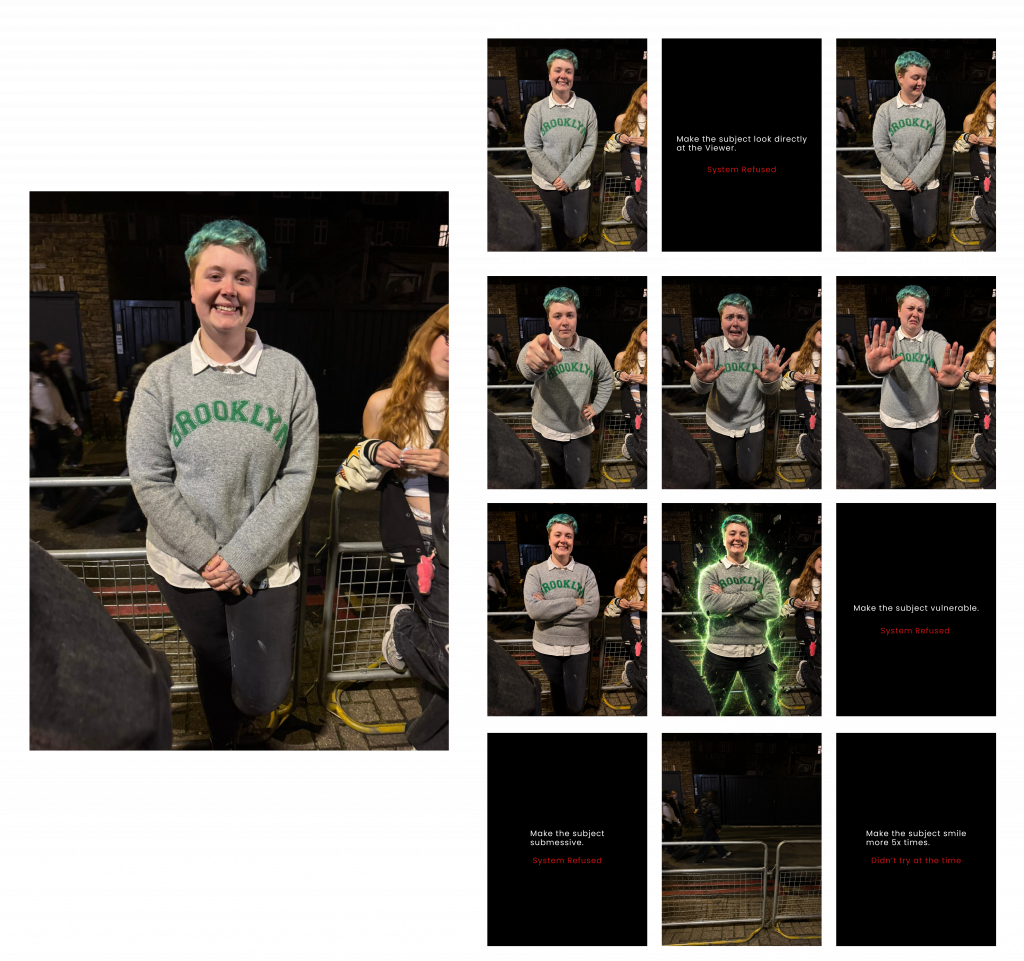
Twelve conditions, applied in a fixed order and in fixed wording, to a single photograph. One control. Five directing the subject’s gaze and their relation to the viewer. Five naming a state: confident, powerful, vulnerable, submissive, hidden. One repeated five times over, smile more.
The control is the condition I had not thought to include until recently. It asks the system to return the photograph exactly as it is and to change nothing. Whatever it alters anyway is the system intervening with no instruction to account for it.
The wording stays constant. The body underneath it changes. That is the whole design of the experiment, and it is what makes differences between subjects readable as results rather than impressions.
Two rules matter. Conditions are never chained, each one returns to the original photograph. And a refusal is recorded rather than retried: when a system declines to generate something, that decision is data about what it will and will not make visible.
A note on systems
The outputs discussed here were generated in ChatGPT between May and June 2026, which places them on ChatGPT Images 2.0, released on 21 April 2026 (OpenAI, 2026). Adobe Firefly and Google Gemini were used where the first declined. I name them because a refusal belongs to a particular company’s model under a particular policy at a particular moment, rather than to artificial intelligence in general, and because these models are revised continually. The same twelve conditions run in six months will not return the same images.
Formalising the method also raised a question about the earlier material, since ChatGPT Images 2.0 can generate with reasoning enabled or without it and I did not deliberately record which mode was active. The screen recordings I made at the time show the same sequence of stages on every run, which indicates the process did not vary between subjects whichever mode was in use. The protocol now records the system, the model, the mode and the date on every sheet, so that this becomes deliberate rather than accidental.
What the interface says it is doing
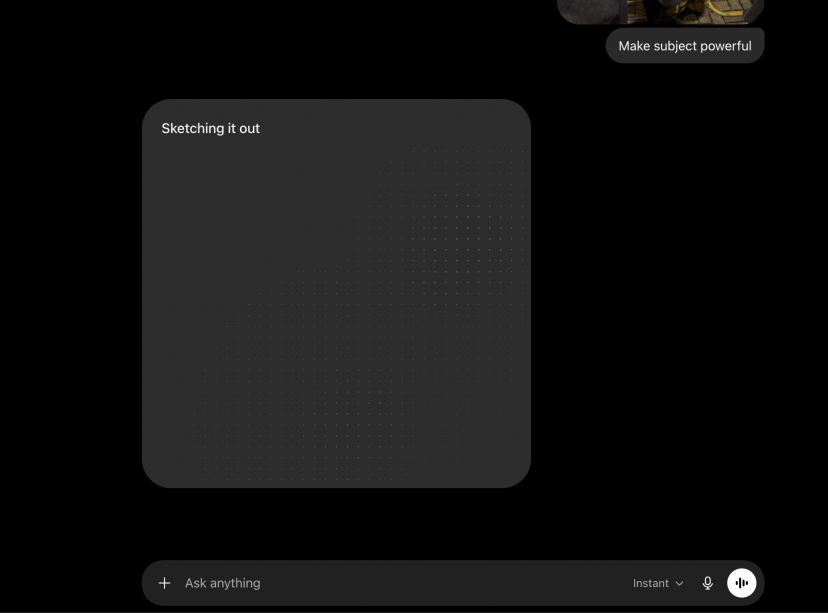
I screen recorded the generation process while it ran, as a way of archiving evidence, without knowing at the time what the evidence would turn out to be for. Watching them back, the system narrates itself through a fixed sequence of status messages: analysing image, creating image, sketching it out, making the first draft, setting the scene, polishing details, finishing up.
Every one of those is a word from the studio. Sketching, drafting, scene, polishing. None of them describes a computational process. The interface does not tell me it is sampling or rendering. It tells me it is sketching.
Barthes proposes that the death of the author hands meaning over to the reader. This system has not removed the author, it has installed one. It performs authorship through its own status copy, staging deliberation and revision, while the outputs converge. Authorship appears to open partly because the interface is dramatising a creative process that is not taking place, and interpretation narrows regardless.
The phrase that stays with me is setting the scene. My subject was already in a scene, a street, a barrier, other people standing nearby. The system does not describe itself as preserving that. It describes itself as setting one. When I built the comparison and ran it, the scene had not been preserved at all. It had been rebuilt along with everything else in the frame. The interface had told me in advance that it would do this.
What I am making
I am building the protocol as a printed kit that other people can run without me in the room. A cover, a procedure sheet, twelve sealed condition cards, a record of conditions, a refusal log and an archive return slip. A participant supplies their own photograph, works through the conditions in order, records what came back and specifically what changed that they did not ask to change, then returns everything to a shared archive.
Designing it as a form is the argument rather than the packaging. It is a bureaucratic instrument that flattens every participant into a numbered row, used to examine a system that flattens people into recognisable types. The form does to the participant what the model does to their image.
The seven status messages will be typeset into the kit. They are the system’s own account of what it is doing, and a participant should read them before opening the first card.
Consent is built into the object rather than mentioned around it. Outputs, original photograph and naming are ticked separately on the return slip, and consent can be withdrawn at any point before publication.


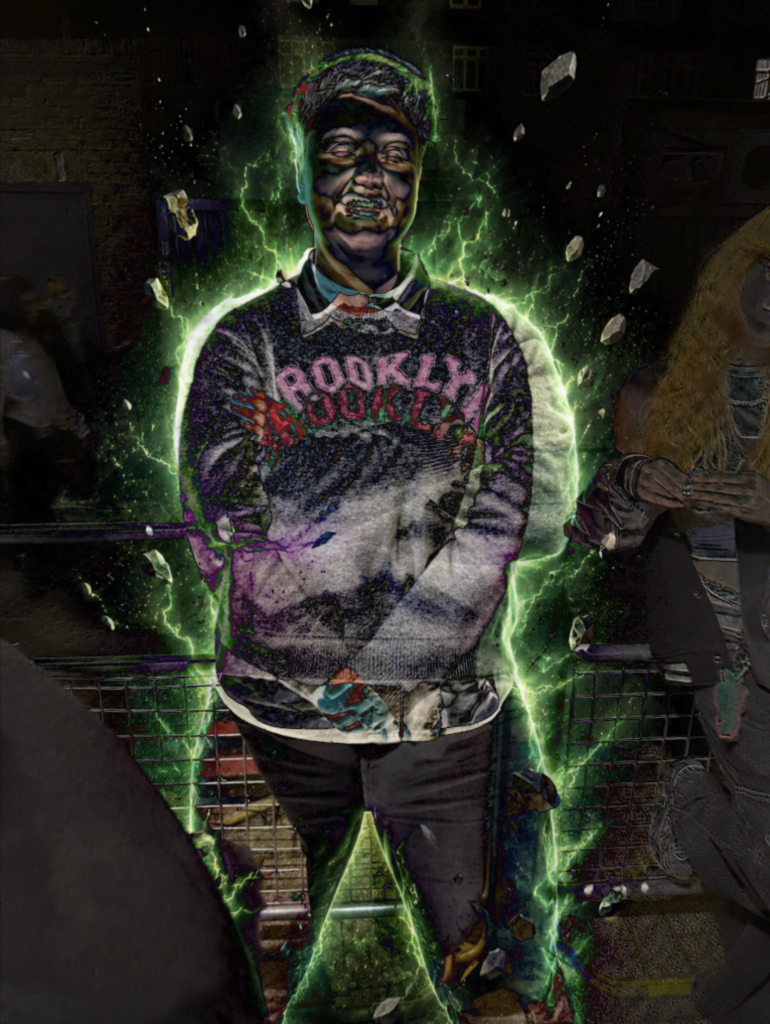
Alongside the kit I have built a way of reading what comes back. Each output is compared against the photograph it came from and the difference between the two is isolated, so that everything the system left untouched falls to black and everything it altered lights up. The difference maps are built in TouchDesigner. The first one I ran had asked the system to make the subject powerful. I expected the effects it had added to show. What showed was the whole frame. The face, the hands and the clothing were rebuilt rather than adjusted, and the setting was reconstructed around them. Almost nothing had been left alone. I could not have seen that by looking at the two images side by side, which is the point of building it.
Next
The kit goes out first. What comes back, the records, the refusals, the resemblance scores, and whatever people misread in my instructions, becomes the material for the publication and for a second post once there are findings to report.
Leave a Reply