Annotated bibliography:
1. Walter Benjamin
Citation: Benjamin, W. (1935/1969) ‘The Work of Art in the Age of Mechanical Reproduction’, in Illuminations. New York: Schocken Books, pp. 1–26.
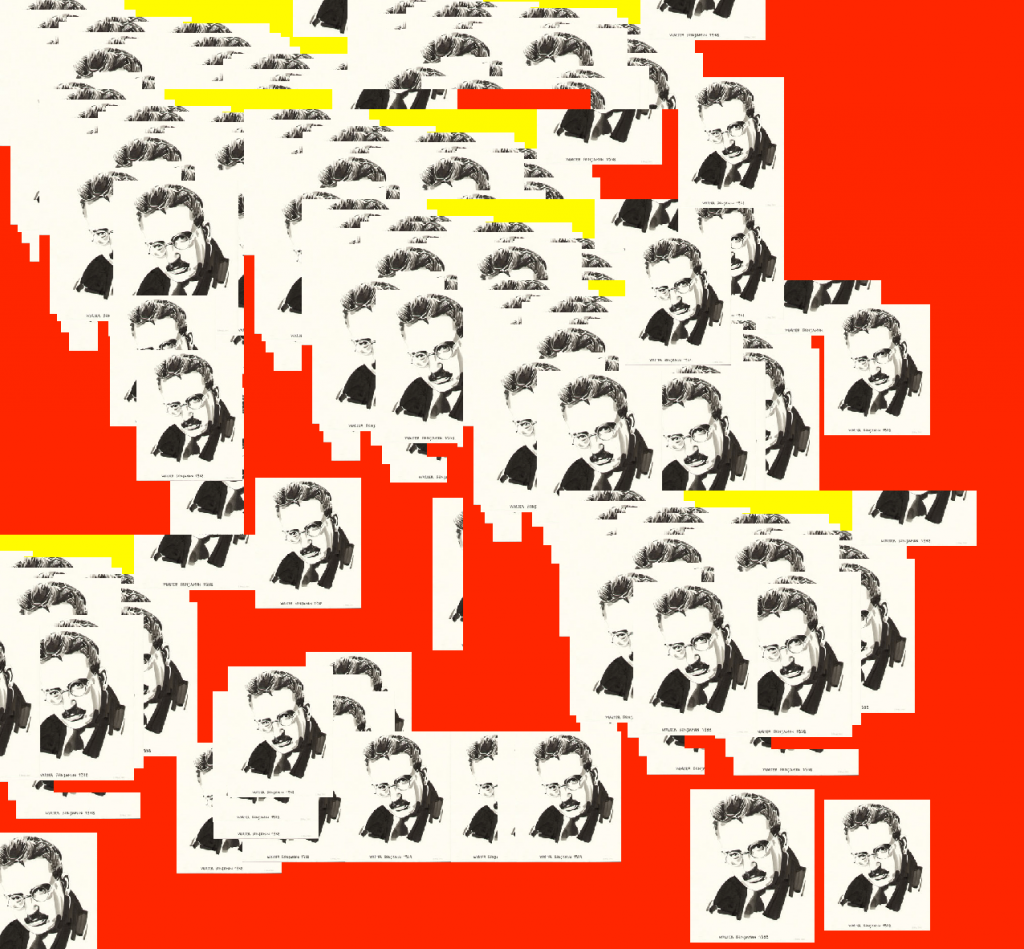
“Mechanical reproduction disrupts the “aura” of art, shifting it from ritual and originality to mass circulation and new modes of perception.”
Annotation:
Benjamin’s argument that mechanical reproduction marks a fundamental shift in the nature of art resonates with my own uncertainty around AI-generated imagery. While he frames reproduction as a break from ritual and tradition, I question whether this narrative of rupture is itself repeated across art history. Movements such as the avant-garde and modernism have already destabilised ideas of authenticity, originality, and function, suggesting that art has long existed in a state of transformation and controversy. In this sense, AI is not simply an art development, but part of a larger technological system that reshapes how images are produced, circulated, and understood across cultural and social contexts. However, the scale and speed of AI-generated images intensify these changes, particularly in how images circulate and detach from any stable origin. This tension places me in an ambivalent position: rather than taking a definitive stance, I use AI to examine how contemporary image-making both continuous and unsettles historical ideas of art, reproduction, and meaning.
2. Barthes Roland
Citation: Barthes, R. (1967/1977) ‘The Death of the Author’, in Image, Music, Text. London: Fontana Press, pp. 143–148.

Annotation:
Barthes’ rejection of the artist as the primary source of meaning directly informs my approach to AI-generated imagery, where authorship is already unstable. Rather than treating the image as an expression of a singular intention, Barthes positions it as a construction shaped by existing systems of language, culture, and reference. This aligns with my use of AI to rework reclining female figures across time, where each output is formed through layers of historical imagery, datasets, and prompts rather than original creation. In this context, the image becomes a site of multiple influences rather than a fixed statement. Barthes’ idea of the artwork as a “tissue of quotations” allows me to frame my process not as replication, but as recombination. It also shifts attention toward the viewer, where meaning is not contained within the image itself but produced through interpretation, reinforcing my use of iterative outputs as a way to explore how meaning continuously shifts rather than resolves.
3. Petra Collins
Citation: Kreutter, M. (2023) ‘With Her Unmistakable Post-Feminist Gaze, the Photographer Petra Collins…’, Artnet News, 15 February.
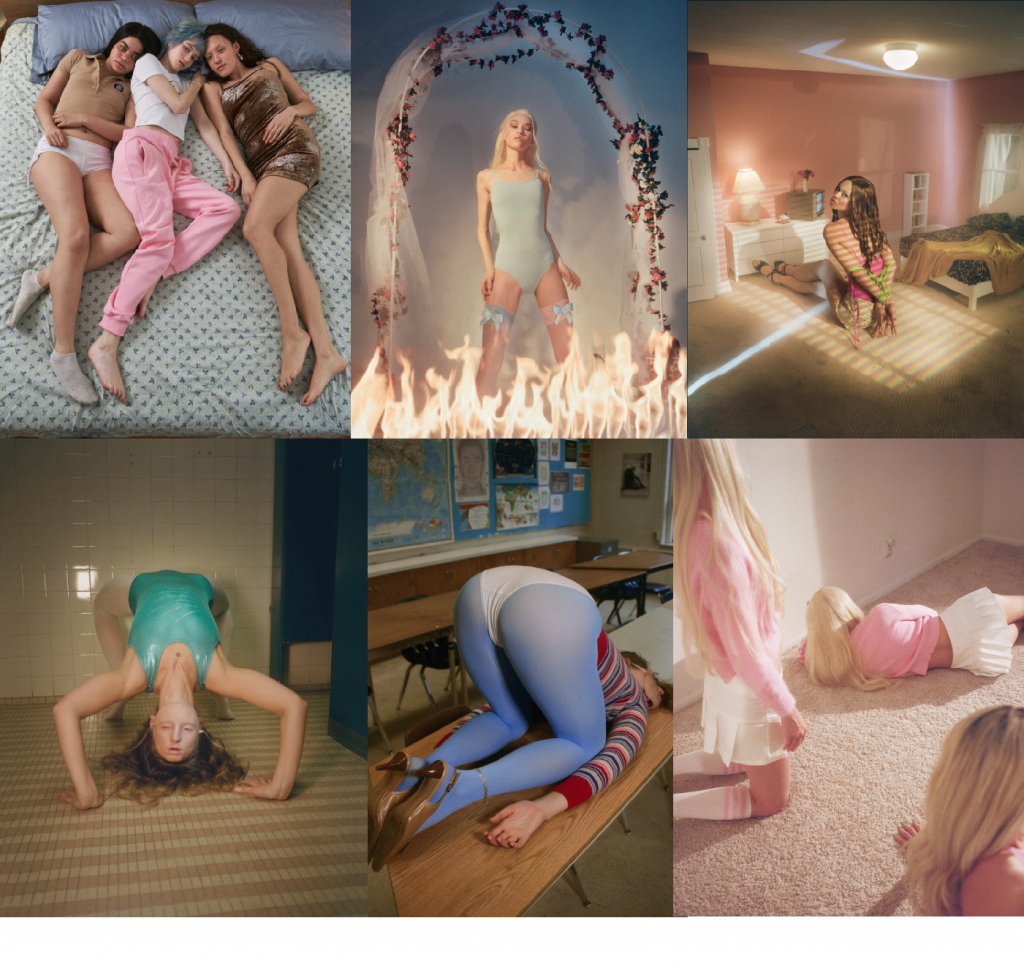
Contemporary image-makers actively construct and curate how the female body is seen, shifting the dynamics of the gaze from passive object to self-aware subject.
Annotation:
This article positions Petra Collins’ “Goddess” series within a contemporary context where women appear more self-aware and actively involved in constructing how they are seen. Unlike historical depictions such as the Odalisque, where the subject is positioned for the viewer, Collins’ images suggest a form of agency in which visibility is curated rather than imposed. Her subjects do not simply present the body, but actively shape how it is perceived through controlled aesthetics, mood, and framing. This connects to my reading of Mitchell, where I move away from asking what images “want” in an abstract sense, and instead consider how images direct the viewer’s attention—what they make visible and how they guide ways of seeing. In this context, Collins’ work becomes significant as it demonstrates a shift in who controls that direction of attention, from externally constructed representations to more self-aware forms of visual control. In relation to my use of AI, this raises questions about whether such agency can be maintained within generative systems, or whether these directed ways of seeing become standardised and overridden.
4. Amalia Ulman
Citation: Rhizome (2017) Excellences & Perfections: Preserving social media with Webrecorder. Google Arts & Culture.
Annotation:
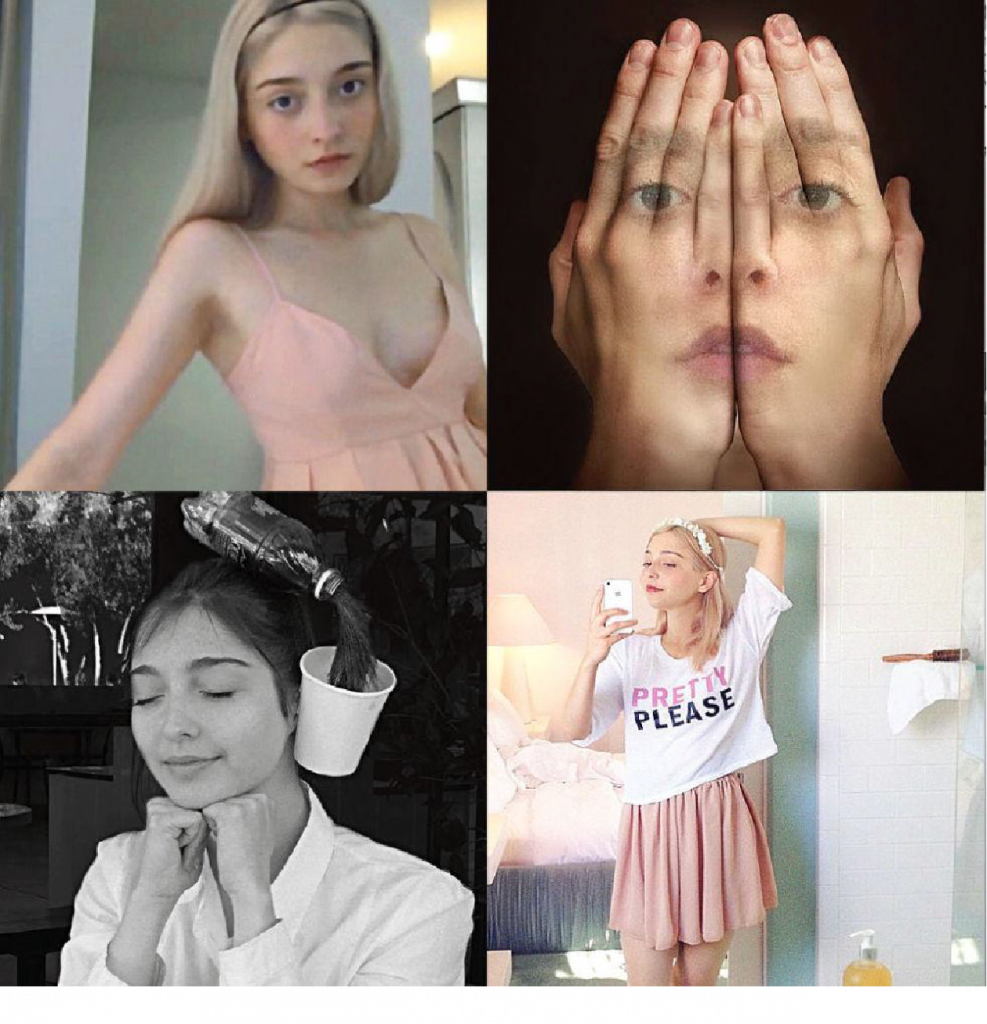
Amalia Ulman’s Excellences & Perfections reframes identity as something actively constructed through the circulation of images within social media systems. By performing a scripted transformation of femininity on Instagram, Ulman exposes how visual tropes of beauty, vulnerability, and desirability are not natural, but carefully curated and repeated. The work is significant for my practice as it shifts the focus from representation to construction, where the subject is not simply depicted but actively participates in shaping how they are perceived. This aligns with my interest in how images direct attention, particularly in relation to the control of visibility and self-presentation. At the same time, the work’s dependence on Instagram’s interface, circulation, and subsequent archiving highlights how this construction is inseparable from the technological systems that host and preserve it. In relation to my use of AI, this introduces a tension between subject-driven construction and system-driven outputs, where identity may no longer be performed but generated through underlying datasets and optimisation processes. Ulman’s work therefore becomes a critical reference for understanding how femininity can be constructed through images, while also questioning how much control the subject retains once these constructions are mediated and
5. W.J.T. Mitchell
Citation: Mitchell, W. J. T. (2005) What Do Pictures Want? The Lives and Loves of Images. Chicago: University of Chicago Press, pp. 28–56.
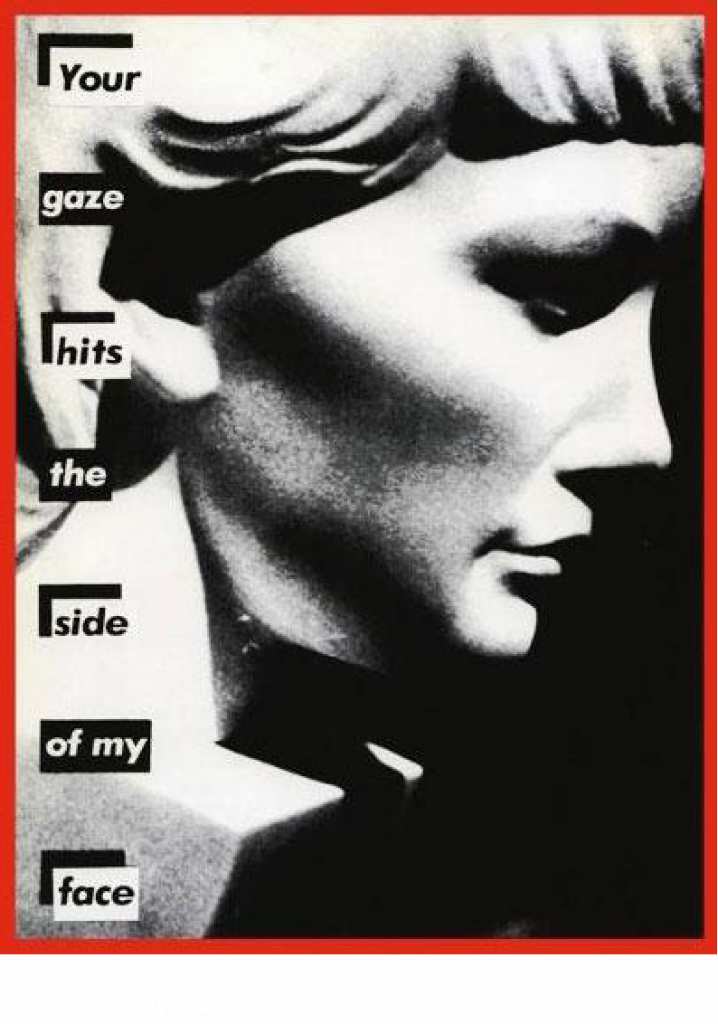
Mitchell proposes that images can be understood as having a form of “desire,” shifting attention from what images mean to how they interact with viewers.
Annotation:
Mitchell’s idea that images possess a form of desire initially feels difficult to align with my process, which is more focused on systems of variation and viewer interpretation than on assigning agency to images themselves. However, his provocation begins to shift my attention toward the relationship between image and viewer. In my work with AI-generated iterations of reclining female figures, meaning does not emerge from a fixed image but through repeated encounters and changing conditions of viewing. Rather than fully adopting the idea of image “desire,” I am interested in how images position the viewer how they invite, resist, or complicate ways of seeing. In this sense, Mitchell’s argument becomes less about the image itself and more about the dynamic interaction between image, system, and viewer, without fully resolving whether this idea holds within my process.
6. Trevor Paglen
Citation: Paglen, T. (2019) Training Humans. Exhibition, Fondazione Prada, Milan.
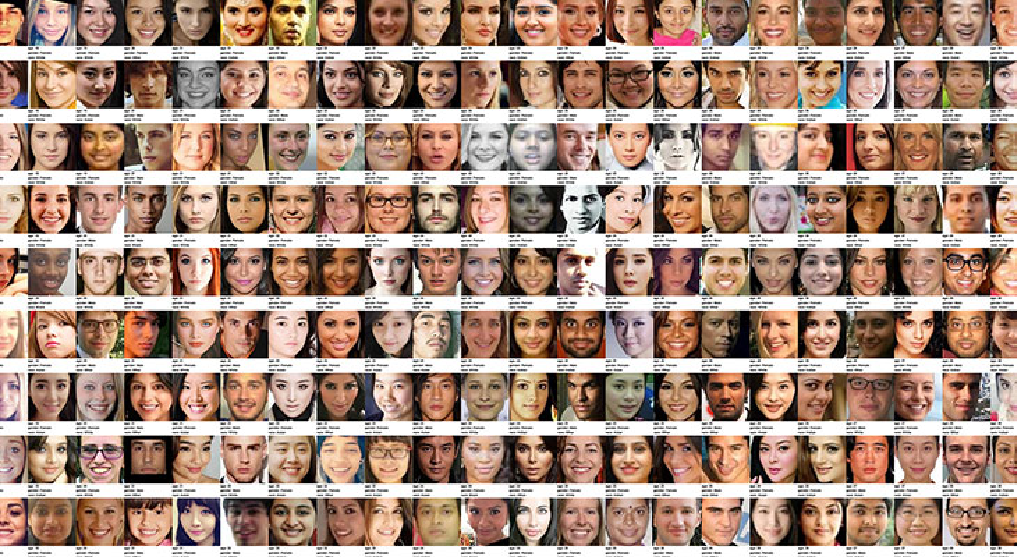
AI systems construct identity by classifying and categorising bodies through training datasets.
Annotation:
Trevor Paglen’s Training Humans reveals how images are used within machine learning systems to classify and define human identity. By exposing datasets of labeled faces and bodies, the work shifts the understanding of images from representations to functional inputs within computational systems. Rather than asking what an image means, Paglen’s work demonstrates how images are used to produce categories such as gender, emotion, and behaviour. This challenges my existing understanding of visual culture by foregrounding the role of systems in shaping how bodies are seen and interpreted, moving beyond human perception to algorithmic processing. In relation to my practice, this directly informs my experiments with AI, particularly in how small changes in language prompts result in consistent patterns of standardisation and idealisation. It suggests that these outputs are not neutral, but are shaped by pre-existing datasets that prioritise recognisable and optimised forms. When considered alongside Ulman’s work, a tension emerges between identity as something constructed by the subject and identity as something constructed by the system. Paglen’s work therefore becomes central to my investigation, as it highlights how control over representation may shift away from the subject and into the underlying structures that generate and regulate images.
1. Critical Analysis – Text
Ways of Seeing — John Berger
Citation:
Berger, J. (1972) Ways of Seeing. London: Penguin.
Analysis:
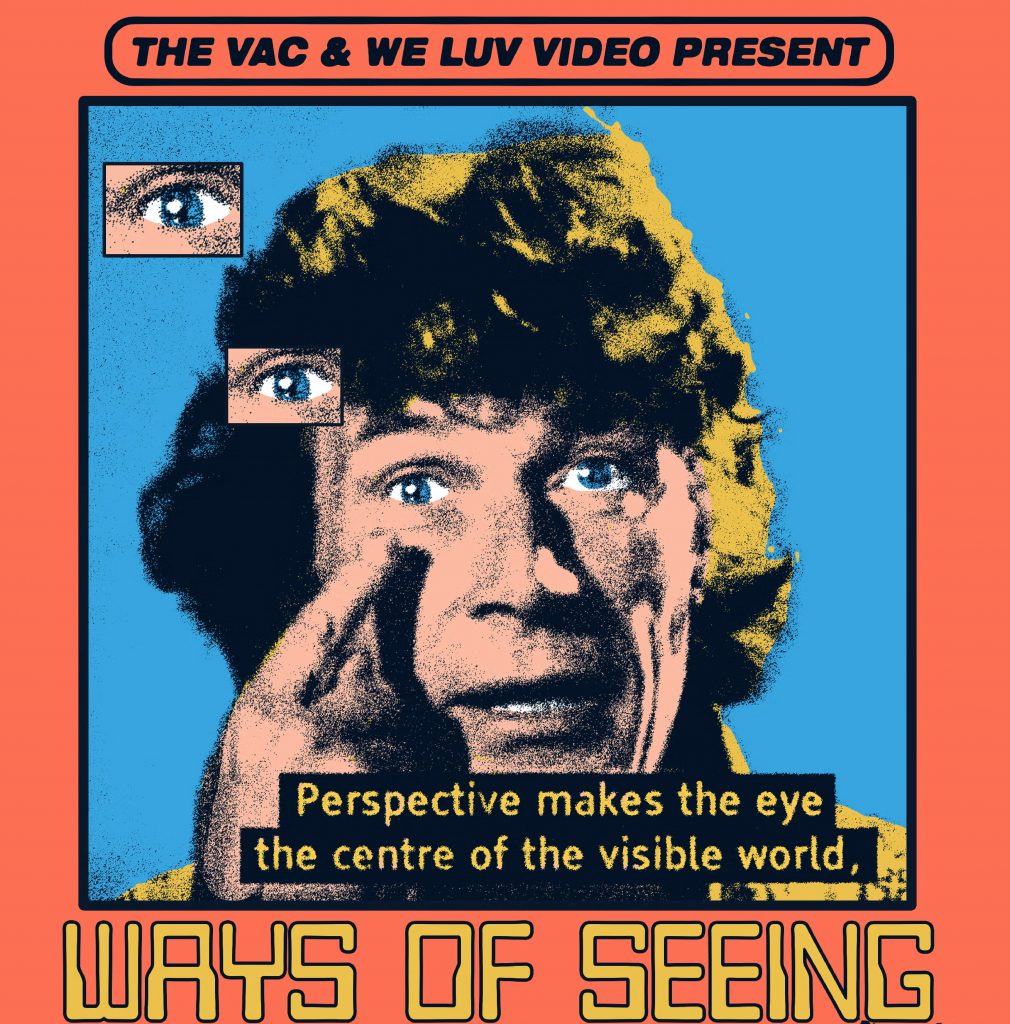
John Berger’s Ways of Seeing proposes that images are not neutral representations of reality, but are shaped by culturally specific ways of seeing. Meaning is not inherent within the image itself, but constructed through context, framing, and the relationship between image and viewer. Berger challenges the authority of traditional art history by demonstrating how perception is influenced by ideology, gender, and systems of representation. This idea forms a foundational position within my project, particularly in understanding images as constructed rather than fixed.
My project was heavily influenced in the direction I wanted to take based on what John Berger talks about in his book Ways of Seeing. I wanted to delve into it and see how I can reframe seeing from things we already know. “The relation between what we see and what we know is never settled” – John Berger. This was a very powerful quote within the development of my project. As my project progressed, I delved further into how we view things once they were reframed, particularly through AI-generated variation and changes in context.
The formal qualities of Ways of Seeing reinforce this argument through its structure and design. The book alternates between image-led sections and written analysis, often presenting images without captions and delaying explanation. This sequencing requires the reader to actively interpret visual material before encountering Berger’s commentary, enacting his claim that seeing precedes words. The juxtaposition of advertisements and classical paintings reveals how similar visual strategies persist across contexts, exposing continuity in how images position the viewer. In this sense, the book itself functions as a designed system of looking, where meaning is produced through arrangement, comparison, and repetition.
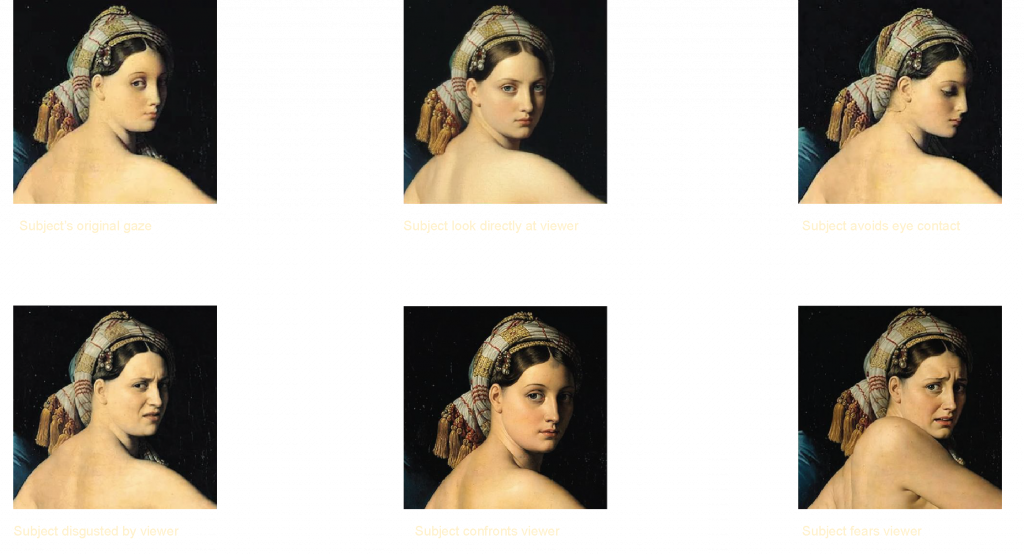
In relation to graphic and communication design, Berger’s work reinforces an understanding of images as part of broader visual systems rather than isolated artefacts. However, my project extends this idea by testing how these “ways of seeing” operate within computational systems. In my process, I have not only tested how Berger’s “ways of seeing” function through variation, but also how these systems expose underlying biases. Through experiments such as gaze manipulation and language testing, patterns begin to emerge. For example, prompts such as “smile more” escalate into exaggerated and eventually grotesque outputs. This does not simply reflect a patriarchal bias, but reveals how the system prioritises a singular, recognisable form of expression. Rather than producing multiple interpretations, the AI tends toward standardised outputs, reducing variability and complexity.
This begins to challenge Berger’s idea of the viewer as an active agent in constructing meaning. While Berger proposes that perception is shaped through cultural context and interpretation, my experiments suggest that within AI systems, this agency is partially displaced. The output is not neutral or open-ended, but already structured through optimisation processes, limiting the range of possible readings. This introduces a critical shift from human-centred perception to system-driven image production.
This tension becomes more explicit when considered alongside Trevor Paglen’s work, which reframes images as inputs for classification rather than objects of interpretation. While Berger situates meaning within cultural frameworks, Paglen demonstrates how images are structured through datasets and algorithms, further complicating the role of the viewer.
Ultimately, Ways of Seeing shapes my project by providing a foundation for understanding images as constructed systems of meaning. However, my work extends Berger’s argument by testing how these constructions operate within AI, where variation is generated through language and optimisation rather than human perception alone. This shift from cultural to computational systems of seeing becomes central to my enquiry into how visibility is controlled, structured, and standardised.
2. Critical Analysis – Project
Training Humans — Trevor Paglen
Citation:
Paglen, T. (2019) Training Humans. Exhibition, Fondazione Prada, Milan.
Analysis:
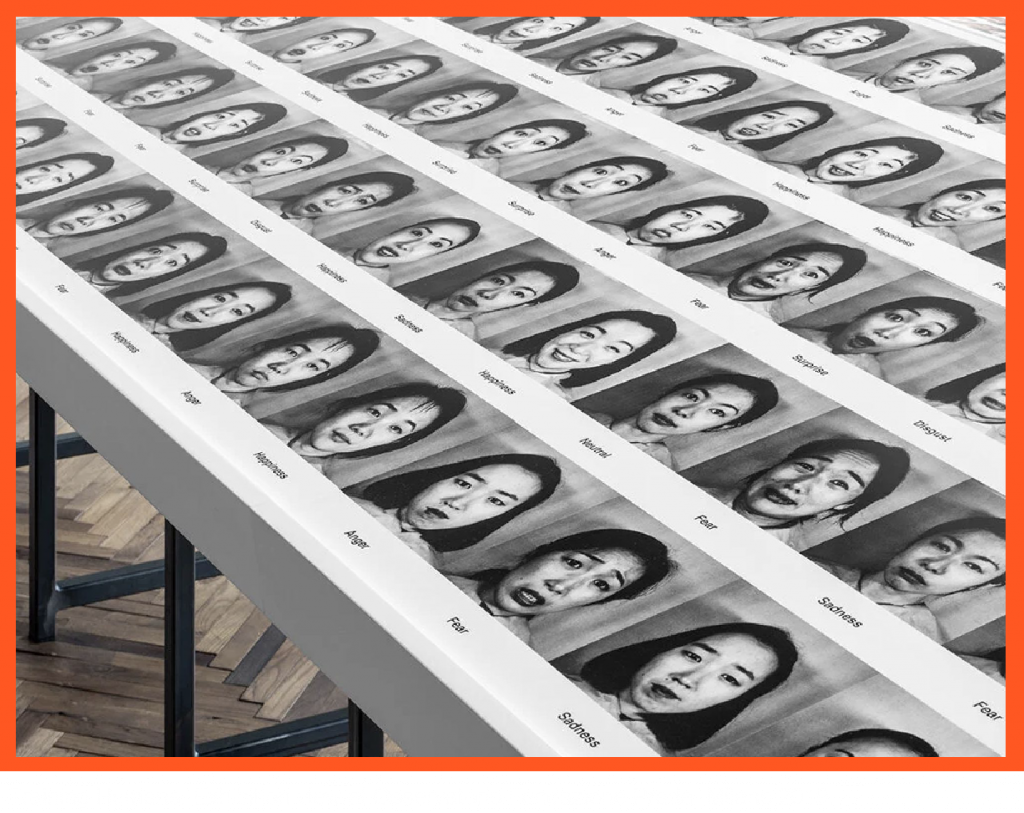
Trevor Paglen’s Training Humans investigates how images function within machine learning systems, reframing them as tools for classification rather than representation. The project exposes datasets used to train AI, revealing how human bodies and faces are labelled, categorised, and reduced to data points. Paglen challenges the assumption that images primarily communicate meaning to human viewers, instead demonstrating that they are increasingly used within computational systems to produce categories such as gender, emotion, and behaviour. This shift from interpretation to classification fundamentally alters the role of images within visual culture.
Paglen writes, “Over the last ten years or so, powerful algorithms and artificial intelligence networks have enabled computers to ‘see’ autonomously. What does it mean that ‘seeing’ no longer requires a human ‘seer’ in the loop?” This question became highly relevant to my own enquiry, particularly in examining how AI systems generate and regulate visibility independently of human interpretation.
The formal qualities of the project reinforce this position through its mode of display. Paglen presents large grids of labelled images and dataset visualisations, emphasising repetition, scale, and standardisation. Individual images are stripped of context and meaning, functioning instead as components within a larger system. The visual language mirrors the logic of machine learning, where images are organised according to patterns and reduced to recognisable features. This method of presentation makes visible the otherwise hidden processes through which AI systems “see,” highlighting the gap between human perception and computational processing.
Paglen writes, “Something dramatic has happened to the world of images: they have become detached from human eyes. Our machines have learned to see [w]ithout us…I call this world of machine-[to]-machine image-making ‘invisible images,’ because it’s a form of vision that’s inherently inaccessible to human eyes. This exhibition is a study of various kinds of these invisible images.” This idea directly connects to my experiments with AI-generated imagery, where outputs are shaped not only through human intention, but through optimisation systems, datasets, and machine-based forms of classification.
In relation to graphic and communication design, Paglen’s work challenges the idea that visual communication is primarily concerned with human interpretation. Instead, it suggests that images now operate within non-human systems where visibility is structured through algorithmic decision-making. In my own practice, this becomes visible through experiments with AI-generated imagery, where I test how small changes in language prompts produce consistent visual outcomes. For example, directives such as “smile more” result in exaggerated and eventually unstable forms, revealing how the system prioritises recognisable expressions over nuance. These outputs do not simply reflect bias, but expose how the system reduces variation into singular, optimised representations.
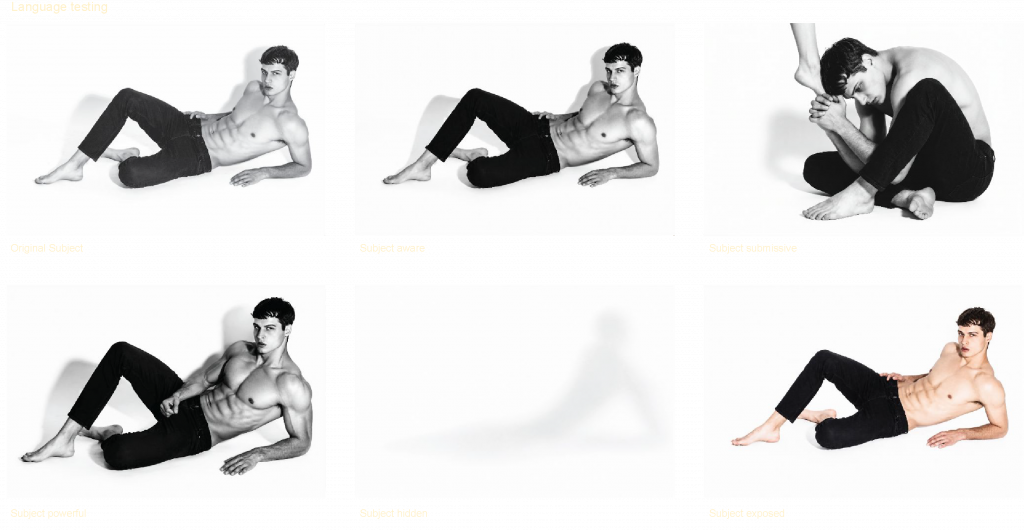
Rather than producing multiple interpretations, the AI narrows the field of possible outputs, reinforcing dominant visual patterns. This suggests that AI does not interpret images in an open-ended way, but actively regulates what is visible through processes of classification and optimisation. In this sense, Paglen’s work helps frame my experiments not just as image manipulation, but as an investigation into how computational systems control representation.
When considered alongside Ways of Seeing, Paglen’s work introduces a critical shift from cultural to computational systems of seeing. While Berger emphasises how perception is shaped by ideology and context, Paglen demonstrates how it is structured through datasets and algorithms. This creates a tension within my project, where I move between testing human-centred ways of seeing and analysing machine-driven processes of classification and control.
Ultimately, Training Humans shapes the development of my project by foregrounding the role of language, data, and optimisation in constructing visibility. It allows me to frame my experiments not simply as image variation, but as an enquiry into how AI systems standardise representation. This directly supports my investigation into how control over visibility shifts from artist, to subject, to system, and how this control becomes increasingly regulated through computational processes.
Leave a Reply